 ESPNBroncos say trade with Chargers for LB Henley 'will not be finalized'
 Denver BroncosStatement from the Broncos
 ESPNRams optimistic about Davante Adams' return after quiet trade deadline
 InjuryChristian Darrisaw: Active → Cleared5 h ago
 InjuryDaniel Jones: Active → Cleared5 h ago
 ESPN49ers face questions at corner heading into Week 10
 InjuryJustin Reid: Active → Cleared6 h ago
 InjuryChamarri Conner: Active → Cleared6 h ago
 InjuryTrey McBride: Active → Cleared6 h ago
 InjuryTyleik Williams: Active → Cleared6 h ago
 Cincinnati BengalsQuick Hits | Joe Burrow Eyes Drew Brees' Record Of 74.4%: 'That Would Be A Fun One To Break'
 Pro Football RumorsNFL Practice Squad Updates: 11/11/26
 ESPNTitans explain decision to keep Tony Pollard
 Pro Football RumorsMinor NFL Transactions: 11/11/26
 Las Vegas RaidersGutierrez: Raiders long-term plan comes to fruition with insertion of Fernando Mendoza at quarterback
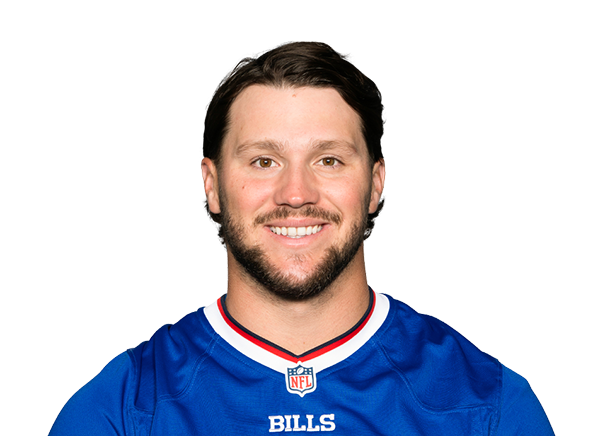
Josh Allen's 0.29 EPA per pass meets the league's top-ranked pass defense
Buffalo's first-ranked passing offense travels to Minneapolis to face the first-ranked pass defense, with three starting tackles listed as questionable.

 Scouting Reportat
 Line BUF -3QBJosh AllenBy Bills Desk, Pigskin NightlyNov 7, 1:26 PM ET3 min read
The matchup in numbers
Josh Allen has produced 0.29 expected points added per pass play across 241 passing plays this season. EPA measures how much a snap changes a team's scoring chances, so a positive number means the offense left the play better off than it started. On Monday night in Minneapolis, that number meets the Vikings' defense, which ranks first in the league against the pass.
The Bills offense sits second overall at 0.173 EPA per play, with a 49 percent success rate and the top-ranked pass offense. The Vikings defense allows minus 0.169 per play and a 37 percent success rate, both first in the league. Allen's own success rate is 48 percent, 11 points above what Minnesota usually concedes.
Both teams are 6-1. Buffalo's point differential is plus 52 and Minnesota's is plus 47, a gap of five points. Buffalo holds the top seed in the conference and the Vikings hold the second.
Where they can win it
The off-script math favors Buffalo. Allen has 28 rushing plays for 74 yards, worth 0.13 EPA per play with a 68 percent success rate. That is the best success rate among Buffalo's leading ball carriers, and it comes when a called pass breaks down and he keeps the drive alive with his legs.
The receivers give him places to throw when he extends a play. Keon Coleman is at 0.68 EPA per target on 28 targets, Dalton Kincaid at 0.48 on 36 and Khalil Shakir at 0.40 on 38. James Cook III adds 707 yards on 138 rushing plays at a 51 percent success rate.
Minnesota's offense gives Buffalo room to work. The Vikings rank 29th at minus 0.096 EPA per play and 28th in rush offense. Aaron Jones Sr. has 110 rushing plays at minus 0.19 EPA and a 35 percent success rate, and Jordan Mason is at a 26 percent success rate on 38.
The worry
The same improvisation that bends the math toward Buffalo has to work against a defense that gives up very little. Minnesota has scored 140 points and allowed 93, and its recent results are tight: 16-10 over the Colts, 23-13 at the Saints, and a 19-15 loss at the Lions. A game that stays in that range leaves little margin for a busted play.
Buffalo's own defense is the other exposure. It ranks 23rd at 0.063 EPA allowed per play and 24th against the pass. Justin Jefferson is at 0.53 EPA per target on 41 targets, and T.J. Hockenson is at 0.67 on 37 with a 62 percent success rate. Buffalo lost to the Patriots 29-26 in Week 4 and has won three straight since, most recently 36-10 over the Ravens.
Availability
Buffalo lists three starting tackles as questionable: Spencer Brown with a back injury, Alec Anderson with an ankle injury and Dion Dawkins with a rib injury. DJ Moore, a starting receiver, is questionable with a shoulder injury. Coleman (shoulder) and Joshua Palmer (hamstring) are also questionable, along with Greg Gaines (calf) and Sam Franklin Jr. (illness). Jordan Hancock is on injured reserve.
Minnesota lists Kyler Murray as questionable with a hamstring injury. He has 920 passing yards at minus 0.04 EPA per play and a 40 percent success rate. Andrew Van Ginkel (chest), Jauan Jennings (calf), Jay Ward (knee) and Demond Claiborne (knee) are also questionable. Kickoff at U.S. Bank Stadium is Monday, Nov. 9, at 8:15 p.m. ET on ABC and ESPN, and the final injury designations will be set by then.
For context, Buffalo is a 3-point favorite on the road with a total of 43.5.