 Pro Football RumorsBrandon Aiyuk’s 49ers Tenure Nearing An End? Latest On WR’s Potential Suitors
 ESPNTom Jackson, Broncos star LB and Hall of Fame broadcaster at ESPN, dies at 75
 Detroit LionsLIONS DAILY: D-line aims to prove doubters wrong vs NFL's top run game
 New Orleans SaintsMorning Break: Saints begin stretch against three straight teams with winning records on Sunday
 InjuryJavon Bullard: Active → Cleared2 h ago
 InjuryBrenton Strange: Active → Cleared2 h ago
 Pro Football RumorsColts Shut Down WR Alec Pierce For Remainder Of Season
 ESPNKirk Cousins on pace to make history as 1st QB to play 18 regular-season games
 Carolina PanthersNFC South Tiebreaker Tracker: Week 11
 ESPNSources: Bucs' Baker Mayfield has plantar fasciitis, determined to keep playing
 InjuryTony Pollard: Active → Cleared15 h ago
 InjuryCam Skattebo: Active → Cleared16 h ago
 InjuryXavier Smith: Active → Cleared16 h ago
Cincinnati's checkdown habit is the one leak in the Bengals' passing tree
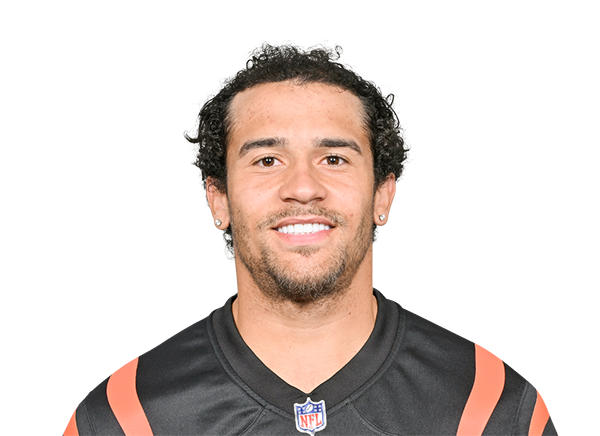
Chase Brown draws 16 percent of the targets at minus 0.16 EPA a play, while Tee Higgins turns 22 percent into 0.70.

 Scouting Reportat
 Line CIN -6RBChase BrownBy Bengals Desk, Pigskin NightlyNov 22, 9:10 AM ET3 min read
The matchup in numbers
Chase Brown has been targeted on 54 plays and has cost the Bengals 0.16 points per play on them. EPA, or expected points added, measures how much a play adds or subtracts compared with an average result from the same spot. Brown's 16 percent target share is the third-largest in the Cincinnati passing tree, and his success rate on those plays is 44 percent.
Tee Higgins runs the same math the other way. He has 74 targets at 0.70 EPA per play, a 68 percent success rate and a 22 percent share. Dohnte Meyers adds 28 targets at 0.27 and an 8 percent share.
The team's top target owns a 26 percent share and 0.55 EPA per play on 87 plays. Joe Burrow turns that tree into 0.26 EPA per play on 366 plays, with a completion percentage 10.5 points above expectation. Cincinnati's pass offense ranks third and its offense overall ranks second at 0.158.
Where they can win it
Washington's pass defense ranks 21st, and its defense overall ranks 22nd at 0.034 EPA allowed per play. The Commanders also allow a 46 percent success rate. That is a defense that gives up early-down gains to a quarterback who is already positive on 55 percent of his plays.
The cleanest route is moving a few of Brown's targets to Higgins on first and second down. Higgins is succeeding on 68 percent of his targets, against 44 percent for Brown. A swap of even a handful of throws a game is a bigger gain than any scheme tweak.
The Bengals have scored 278 points and allowed 193, a difference of 85, with a five-game winning streak. Those wins came by 20, 17, 7 and 22 points, so the results are not leaning on a single close finish.
The worry
Brown's running is no better than his receiving. He has 113 rushing plays at minus 0.12 EPA and a 38 percent success rate. Samaje Perine is at 0.04 on 52 carries. Cincinnati's rush offense ranks 17th, and the Commanders' run defense ranks 23rd, which is soft but not a cure.
The defense has a separate problem. The Bengals rank 26th against the run, and Washington has 65 plays from Rachaad White at minus 0.01 and 67 from Jacory Croskey-Merritt at minus 0.08. Neither is a threat, but a 3-5-1 team does not need one to move the chains against a 26th-ranked run defense.
The Commanders' receiving numbers are thin. Stefon Diggs holds a 20 percent share at 0.19, Antonio Williams has 0.27 and Terry McLaurin has 0.44 on a 10 percent share. Cincinnati's pass defense ranks 12th, so the quiet risk is more McLaurin than the leaders.
Availability
The line is where this call gets decided. Dalton Risner is out with a knee injury and Dylan Fairchild is questionable with an oblique injury. Both are starting guards, and Burrow's 0.26 EPA per play depends on a clean pocket.
Dax Hill, a starting cornerback, is questionable with an illness. Kyle Dugger, a safety who is not a starter, is questionable with a quadriceps injury. Andrei Iosivas is on injured reserve, which leaves Meyers and Brown to fill the third and fourth spots in the tree.
Washington lacks more up front. Laremy Tunsil is on injured reserve, and Lucas Patrick, a starting guard, is questionable with a concussion. Amik Robertson, a starting cornerback, is questionable with an ankle injury, as is White.
Cincinnati is a 6-point favorite on the road in a game with a total of 54.5, numbers that frame the market's view of a 7-2 team against a 3-5-1 one and nothing more.