 Los Angeles RamsBlake Corum sparking Rams' second-half offense in past four games amid six-game scrimmage touchdown streak
 Bills DeskA punter's 30-yard pass was Buffalo's biggest swing in a 26-9 win over Miami10 min ago
 Arizona CardinalsThe Future Of Beck's Back, And Chiefs Aftermath
 Titans DeskTitans' offense held up in Dallas; the defense never got off the field15 min ago
 InjuryJustin Herbert: Active → Cleared21 min ago
 InjuryParker Washington: Active → Cleared21 min ago
 Dolphins DeskDolphins go 2-for-14 on third down and never reach the end zone in Buffalo25 min ago
 Ravens DeskRavens ran for 7.1 a carry, then lost to Carolina on a Brissett pass30 min ago
 Steelers DeskSteelers' defense held Philadelphia to 213 yards and the offense still lost it35 min ago
 Chicago BearsBears win fifth straight game, move to 8-2 with victory over Saints | Game Recap
 InjuryLukas Van Ness: Active → Cleared54 min ago
 ESPNJeffery Simmons gets 3 sacks as the Chicago Bears beat the New Orleans Saints 21-13
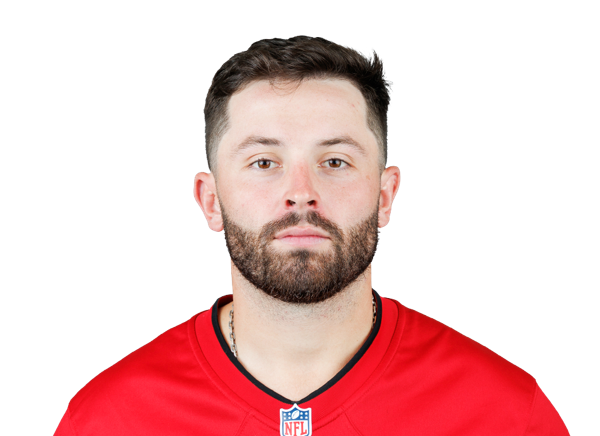
Baker Mayfield's passing graded positive in Detroit, and Tampa Bay still lost by 10
The Buccaneers' dropbacks beat the baseline at 0.151 EPA each, but four sacks and a Lions red zone that went 3-for-3 sank them at 3-7.
 The TapeL 21–31at
 LIONSQBBaker MayfieldBy Buccaneers Desk, Pigskin NightlyNov 22, 5:20 PM ET3 min read
The deciding stretch
Tampa Bay's passing offense came out of Ford Field in the black, and the Buccaneers still lost 31-21. Baker Mayfield's dropbacks averaged 0.151 EPA, expected points added, which measures what a play is worth beyond what the down, distance and field position predicted. Detroit's dropbacks averaged 0.339.
The gap shows up at the goal line. The Lions went 3-for-3 in the red zone and turned 10 drives into five scoring drives, four of them touchdowns. Tampa Bay went 2-for-3 in the red zone and scored on three of nine drives. Every one of those was a touchdown, so the Buccaneers were efficient when they finished and short on chances to finish.
The defense is supposed to be the bend-don't-break side of this team. Against Detroit it bent for 14 plays and 90 yards on the Lions' longest touchdown drive and gave up 9.6 yards per pass. Tampa Bay's longest drive was 12 plays and 70 yards, also a touchdown.
The swing
The sacks explain why a positive EPA night produced so little yardage. Mayfield was sacked four times for 33 yards, while Detroit's quarterback went down once for 2. Tampa Bay's net passing yardage was 154, to 277 for the Lions, and the Buccaneers averaged 4.2 yards per pass.
Mayfield was 20 of 33 for 187 yards and two touchdowns, with no interceptions and a 96.4 passer rating. He averaged 5.7 yards per attempt. Efficient passing that gets taxed by 33 lost yards is still a passing game that loses field position.
The Lions also got help they did not earn. Josiah Trotter was flagged for a face mask in the fourth quarter, a 15-yard penalty that cost Tampa Bay 8 points of win probability. The Buccaneers and Lions each had eight penalties, but Detroit's cost 72 yards to Tampa Bay's 58.
Who moved the needle
Ted Hurst III was the best player on the field for Tampa Bay by EPA, at 6.9 over seven plays. He caught five passes for 56 yards and two touchdowns on seven targets. Mayfield added 6.3 total EPA across 42 plays, and Chris Godwin Jr. added 1.7 on three plays.
The run game was the drag. Bucky Irving carried 18 times for 68 yards and a touchdown, a 3.8-yard average, and his rushing cost 2.1 EPA. Tampa Bay's team figure on the ground was minus 0.116 EPA per rush, against plus 0.211 for Detroit, even though the Buccaneers out-averaged the Lions 4.3 yards to 3.9 per carry. Yards were there. Value was not. Emeka Egbuka also finished in the red, at minus 0.6 EPA, with two catches for 18 yards on five targets.
On defense, Trotter had 14 tackles with no sacks or quarterback hits. David Walker had the only sack, two tackles for loss and two quarterback hits. Tykee Smith broke up a pass and had nine tackles. Detroit's pass rush faced pressure on one dropback in the sack column, and Tampa Bay's was nearly absent from it.
Where it leaves them
The Buccaneers are 3-7 with a streak of two straight losses, but they have outscored opponents 223-209. That plus-14 margin says the record is worse than the scoring, and the passing numbers in Detroit support the same read. A team with positive EPA per dropback and a red zone defense that stops giving up touchdowns should not be 12th in the conference.
Still, the division is no gift. Carolina is 5-5, two wins ahead, and the Buccaneers sit level with New Orleans and Atlanta at 3-7. Tampa Bay was also 0-for-2 on fourth down against Detroit, and coaches are judged on those decisions against the math, not the result.
Next is Carolina at home on Monday, Nov. 30, at 8:15 p.m. ET on ESPN. The measure is whether Mayfield's dropbacks stay positive when the pass protection holds, and whether the defense finishes drives in the red zone.