 New York JetsJets-Dolphins Game Recap | Green & White Turn Takeaways, Explosive Plays into 23-12 Win Over Miami
 Giants DeskXavier Gipson's punt return bailed out a Giants offense that went 1-for-9 on third down16 min ago
 InjuryZach Charbonnet: Questionable → Active22 min ago
 InjuryLuke McCaffrey: Active → Questionable22 min ago
 InjuryEddy Pineiro: Active → Cleared32 min ago
 InjuryTravis Hunter: Active → Cleared32 min ago
 InjuryTony Jefferson: Questionable → Active32 min ago
 Baltimore RavensGame Recap: Ravens Fall to Texans in Overtime, Extend Losing Streak to Seven Games
 ESPNNew Orleans Saints vs. Cincinnati Bengals: Full Highlights
 ESPNNew York Jets vs. Miami Dolphins: Game Highlights
Kirk Cousins threw the Vikings's worst play, and the pass offense still averaged 6.1
Minnesota beat Atlanta 28-14 with a passing game at minus 0.006 EPA per dropback, and the film points at where the throws start.
 8
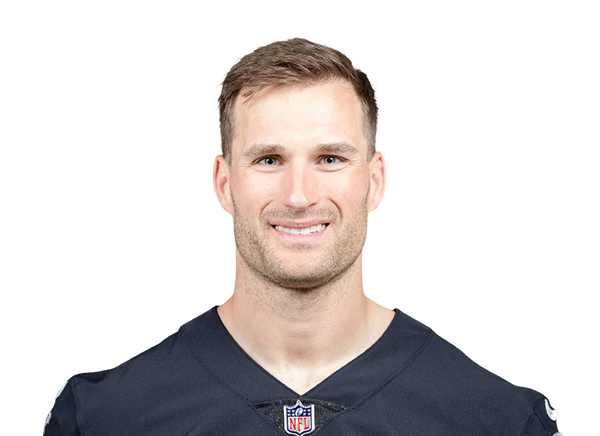
 The TapeW 28–14vs
 FALCONSQBKirk CousinsBy Vikings Desk, Pigskin NightlyNov 29, 5:45 PM ET3 min read
The deciding stretch
The Vikings's worst play of the afternoon came at 5:50 of the third quarter. Kirk Cousins threw short middle for Myles Price from the shotgun, J.Robinson intercepted it at the ATL 31, and a replay review kept him up for a 39-yard return to the MIN 30. Minnesota's win probability fell 9 points on the snap, its largest drop of the game.
Price finished with two plays and minus 6.2 EPA. EPA, expected points added, measures how much each play moves the number of points a team can expect to score on the drive. No other Vikings player was close to that figure, in either direction.
The score was 14-14 at that point, and Minnesota had gone two quarters without a point. It still won by 14, because the fourth quarter belonged to the defense.
The swing
Atlanta's drive after the interception did not decide the game. What decided it was that Minnesota's passing game, which produced no points between the first and fourth quarters, never fell far enough to lose it. Cousins finished 19 of 29 for 186 yards at 6.4 per attempt, with one touchdown and the one interception. Team yards per pass was 6.1.
Those are short-field numbers. Minnesota converted 2 of 9 third downs, and its longest drive, 13 plays and 68 yards, ended on a failed fourth down. The Vikings were 1-2 on fourth down for the game and 3 for 4 in the red zone.
The passing game still produced 11 of Minnesota's 24 first downs, against 5 passing first downs for Atlanta. The offense moved the chains with underneath throws, not with chunk plays.
Who moved the needle
Justin Jefferson drew 13 targets and caught 8 for 74 yards, 9.3 per catch with a long of 17. That is a lot of volume for a modest average. A receiver of his kind getting nearly half of the team's 29 attempts and never breaking 17 yards says the design is working to get him the ball, not to get him open past the second level.
T.J. Hockenson was the opposite case. He caught 5 of 6 targets for 73 yards, 14.6 per catch, a long of 25 and a touchdown. His 5.3 total EPA on six plays was the best on the team, and it was more than Aaron Jones Sr. (1.4 on three catches) and Cousins's own rushing work (1.5 on five plays) combined.
The ground game did less than the box score suggests. Jordan Mason ran 12 times for 58 yards and a touchdown, 4.8 a carry, but his plays added up to minus 2.0 EPA. The team ran for 107 yards at 4.0 a carry and 0.046 EPA per rush. Atlanta ran for 197 yards.
The defense is where the margin came from. Jalen Redmond and Andrew Van Ginkel each had 1.5 sacks and 2 quarterback hits, and Atlanta turned the ball over 4 times. Atlanta's EPA per dropback was minus 0.341, against Minnesota's minus 0.006.
Where it leaves them
The Vikings are 8-3 and hold the sixth seed, third in the NFC North behind Chicago at 9-2 and Detroit at 8-3. Their point differential is plus 39. This game added to that with a 53-play offense that posted 0.016 EPA per play and a 49 percent success rate, against 45 percent for Atlanta.
That is a good defensive afternoon and an average offensive one, and the margin leaned on turnovers, the least repeatable part of any game. A team that wins this way is borrowing against its next few Sundays. The fix is on the passing tree: Hockenson averaged 5.6 yards more per catch than Jefferson on less than half the targets, and the next game should show whether that gets corrected.
Carolina visits U.S. Bank Stadium on Sunday, Dec. 6 at 4:25 PM ET on CBS, with Minnesota favored by 5.5.